
Insights & News
The latest insights and perspectives from our team
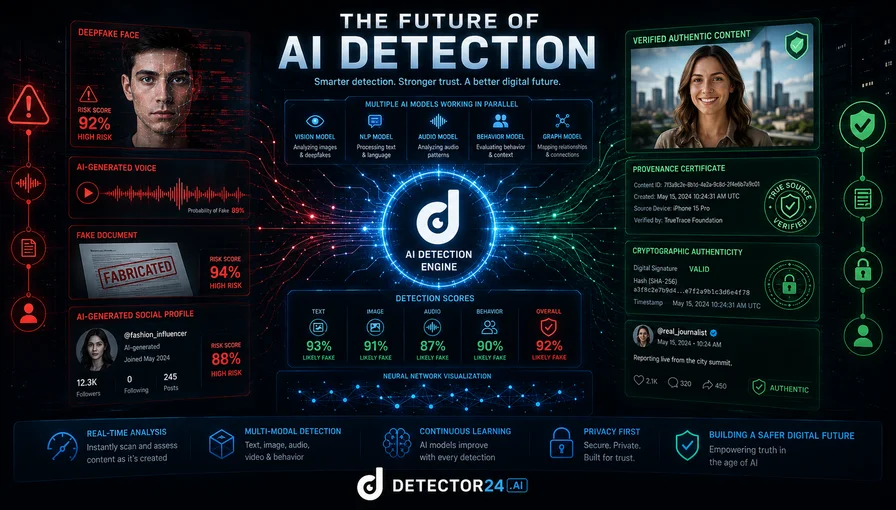
The Future of AI Detection: Deepfakes, Voice Cloning & Synthetic Media Protection
Explore the future of AI detection, from deepfakes and voice cloning to synthetic documents and content authenticity verification. Learn the trends shaping digital trust in 2026 and beyond.
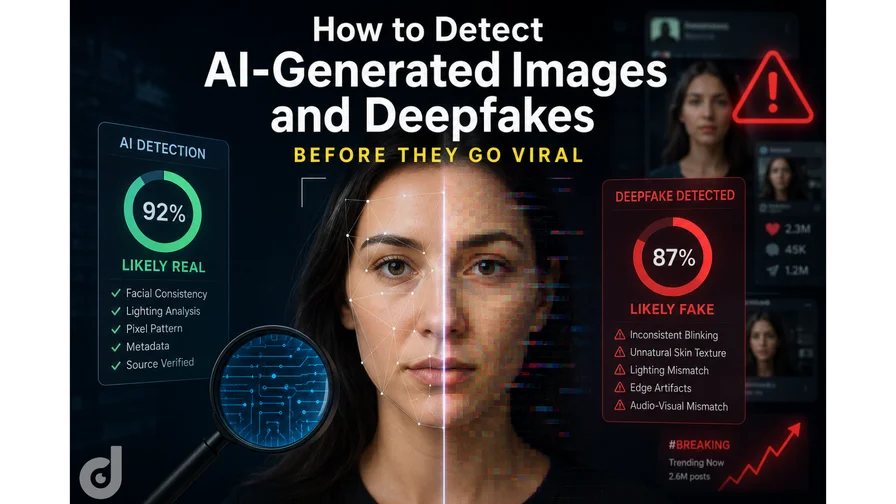
Detect AI-Generated Images & Deepfakes
Learn how to detect AI-generated images and deepfakes before they go viral with real-time AI analysis and detection tools from Detector24.
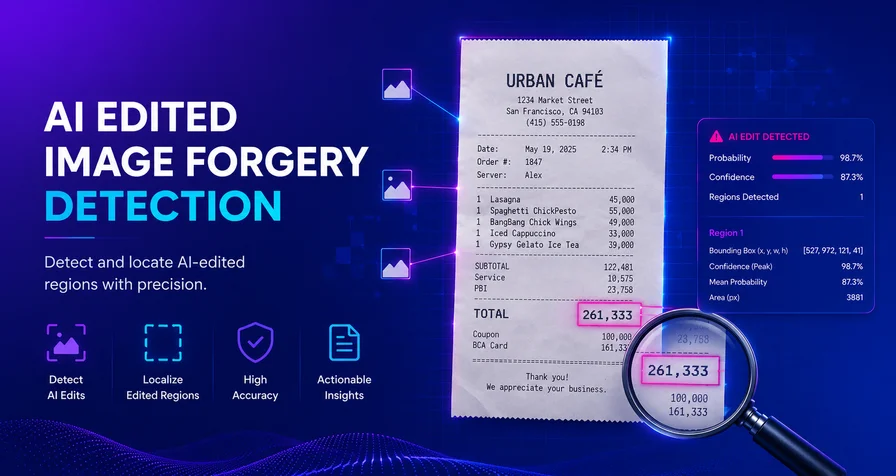
AI‑Edited Image Forgery: The New Fraud Frontier and How to Fight Back
Digital images used to be easy to trust. Photos of a car accident, a scanned receipt or a driver’s licence were considered reliable evidence because editing them required professional tools and meticulous manual work. Over the last two years that assurance has evaporated. Generative models such as Google Nano‑Banana, Flux Kontext, GPT‑4o Image, Qwen‑Image‑Edit, Bagel, Step1X‑Edit and TextFlux allow anyone to perform “surgical” edits: upload a real photograph, write a sentence like “change the total to $4,800” or “add a dent to the front bumper,” and seconds later receive an image where only the specified region has been repainted. Lighting, shadows and textures match perfectly, and every pixel outside the altered region is byte‑identical to the original. The ease of prompt‑driven editing has rewired the economics of fraud, enabling scams in insurance, expenses, identity verification and even politics.

AI Detectors in Education: Protect Academic Integrity in the Age of ChatGPT & Claude
Discover why AI detectors are becoming essential for education. Learn how institutions can detect AI-generated content, ensure fair assessment, and protect academic integrity in the era of ChatGPT and Claude.

AI Moderation & Content Safety: Detecting Emerging Threats
Discover how AI moderation adapts to deepfakes, synthetic media, and evolving online threats using multimodal analysis and real-time detection.

From Toxicity to Deepfakes: Multi-Modal AI Detection Explained
Learn how multi-modal AI detects toxicity, deepfakes, synthetic audio, and manipulated media across text, images, video, and audio to secure digital platforms.
AI Detection of Edited Media: Challenges & Solutions
Learn the top challenges in detecting manipulated and edited media—and how AI systems identify deepfakes, tampered images, and synthetic content at scale.
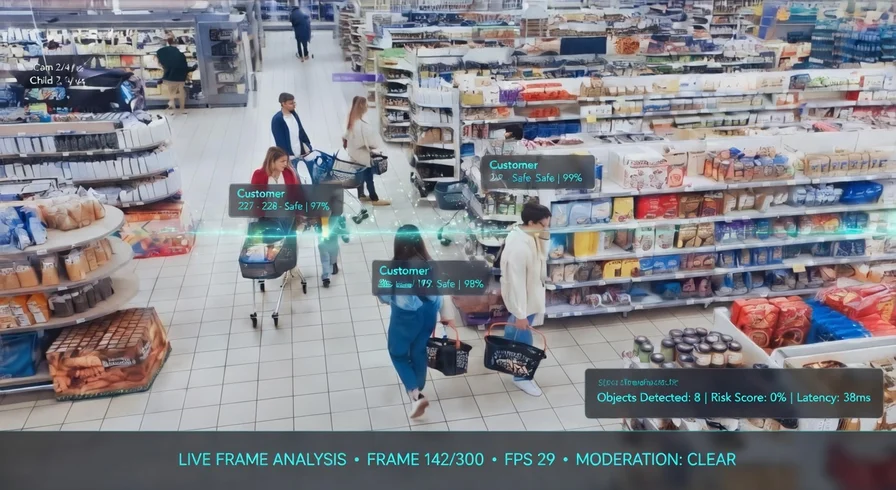
AI Video Moderation Explained: Frame-by-Frame Analysis
Learn how AI analyzes video frame by frame to detect harmful, illegal, and policy-violating content in real time. Discover how Detector24 enables scalable video moderation.

The Risks of AI-Generated Content on Social Media
AI-generated images, videos, audio, and text are reshaping social media. Explore the risks, real-world impacts, and why detection now matters.

AI Detection for Educators & Publishers
Learn how educators and publishers can use AI detection responsibly—combining policy, human review, and detector24 signals to protect authenticity and trust.

The Risks of AI-Generated Content on Social Media
Learn how AI-generated images, videos, audio, and text are reshaping social media. Explore the risks, real-world impacts, and why detection now matters.

Face Redaction of Minors in Images API
Publishing images that contain unredacted faces of minors on social media or digital platforms carries significant legal, financial, and reputational risk. Global regulations such as COPPA (US), GDPR (EU), and the UK Age Appropriate Design Code treat a child’s face as personal—and often biometric—data, requiring strict safeguards and, in many cases, verified parental consent. Non-compliance can result in multi-million-dollar fines, regulatory enforcement, civil liability, and long-term brand damage.