
Vehicle Detection
Detect and classify vehicles in images: cars, trucks, motorcycles, buses. AI-powered vehicle recognition for traffic analysis and fleet management.
Bynn Vehicle Detection
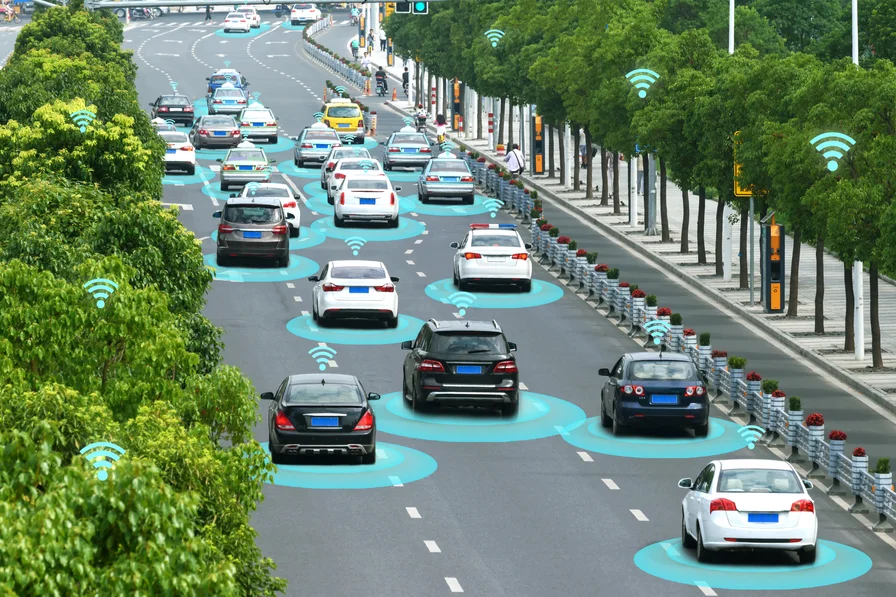
The Bynn Vehicle Detection model identifies and locates vehicles in images, including cars, trucks, buses, motorcycles, and bicycles. With precise segmentation masks for each vehicle, this model is ideal for traffic analysis, parking management, and fleet monitoring.
The Challenge
Vehicle detection underpins countless applications from traffic management to insurance processing. Cities need accurate traffic counts for infrastructure planning. Parking systems must detect occupancy in real-time. Insurance companies process millions of claim photos requiring vehicle identification. Security systems monitor for unauthorized vehicles.
The diversity of vehicles and conditions makes detection challenging. Vehicles range from motorcycles to semi-trucks, in countless colors, models, and states of visibility. Weather, lighting, and camera angles vary dramatically. Partial occlusion by other vehicles or objects is common. Effective detection must handle this variability while maintaining high accuracy across vehicle types and conditions.
Connected to CCTV infrastructure, vehicle detection enables smart city applications. Parking garages can display real-time availability and guide drivers to open spaces. Traffic management systems can monitor lane utilization on public roads, adjust signal timing, and detect congestion before it cascades. Toll systems can count and classify vehicles automatically. The same detection powers everything from municipal planning to commercial parking operations.
Model Overview
When provided with an image, the detector analyzes the visual content to identify and classify different types of vehicles. The model uses advanced object detection with instance segmentation, providing both the location of each vehicle and pixel-level masks that precisely outline each detection.
Achieving 96.8% accuracy, the model can reliably detect and classify various vehicle types in diverse scenarios from parking lots to busy intersections.
How It Works
The model employs open-vocabulary object detection technology optimized for vehicle recognition. For each detected vehicle, the system returns:
- Bounding box coordinates: The rectangular region containing the detected vehicle
- Confidence score: A probability value (0.0-1.0) indicating detection certainty
- Class name: The specific type of vehicle detected
- Segmentation mask: A pixel-level PNG mask outlining the exact shape of each vehicle
Response Structure
The API returns a structured response containing:
- num_detections: Total count of vehicles detected in the image
- detections: Array of detection objects, each containing:
- bbox: Bounding box coordinates {x1, y1, x2, y2}
- score: Detection confidence (0.0-1.0)
- class_name: Type of vehicle
- mask_png: Base64-encoded PNG segmentation mask
- image_size: Original image dimensions {width, height}
Detected Classes
The model can identify the following vehicle types:
Motor Vehicles
- Car, parked car, moving vehicle
- Truck, van
- Bus
- Motorcycle
Non-Motor Vehicles
- Bicycle
People & Activities
- Person driving car
Performance Metrics
| Metric | Value |
|---|---|
| Detection Accuracy | 96.8% |
| Average Response Time | 5000ms |
| Max File Size | 20MB |
| Supported Formats | GIF, JPEG, JPG, PNG, WebP |
Use Cases
- Traffic Analysis: Count and classify vehicles for traffic flow analysis and urban planning
- Parking Management: Monitor parking lot occupancy and availability
- Fleet Monitoring: Track and verify fleet vehicle presence in images
- Insurance Claims: Identify and count vehicles in accident or incident photos
- Content Classification: Categorize images containing vehicles for media organization
- Security & Surveillance: Detect vehicles in security camera footage for monitoring
- Retail Analytics: Analyze customer arrival patterns by vehicle detection in parking areas
Known Limitations
Important Considerations:
- Heavy Occlusion: Heavily occluded vehicles (e.g., in dense parking) may have lower detection rates
- Distant Vehicles: Very small or distant vehicles in wide shots may not be detected
- Unusual Vehicles: Specialty vehicles (construction equipment, trains) may not be classified correctly
- Toy Vehicles: Toy cars, model vehicles, or vehicles in images/screens may be detected
- Vehicle Make/Model: The model classifies vehicle type but does not identify make, model, or license plates
Disclaimers
This model provides probability scores and classifications, not definitive identification.
- Estimation Tool: Use as an automated estimation tool for vehicle counting and classification
- Type Classification Only: The model identifies vehicle type, not specific make, model, or ownership
- Privacy Considerations: Ensure your use case complies with privacy regulations regarding surveillance
- Verification: For critical applications (insurance, legal), combine with human verification
Best Practice: Use the segmentation masks to visually verify vehicle counts and types, and combine with human review for high-stakes applications.
API Reference
Input Parameters
Open-vocabulary object detection with segmentation. Detects objects using text prompts.
image_urlstringRequiredURL of the image for object detection
https://example.com/image.jpgResponse Fields
Object detection results with bounding boxes and segmentation masks
num_detectionsintegerNumber of objects detected
3detectionsarrayArray of detected objects
bboxobjectBounding box {x1, y1, x2, y2}
{"x1":100,"y1":150,"x2":300,"y2":400}scorefloatDetection confidence (0.0-1.0)
0.95class_idintegerClass index
0class_namestringDetected object class name
personmask_pngstringBase64-encoded PNG segmentation mask
data:image/png;base64,...image_sizeobjectOriginal image dimensions
{
  "width": 1920,
  "height": 1080
}
Complete Example
Request
{
  "model": "vehicle-detection",
  "image_url": "https://example.com/image.jpg"
}
Response
{
  "success": true,
  "data": {
    "num_detections": 2,
    "detections": [
      {
        "bbox": {
          "x1": 100,
          "y1": 150,
          "x2": 300,
          "y2": 400
        },
        "score": 0.95,
        "class_id": 0,
        "class_name": "person",
        "mask_png": "data:image/png;base64,iVBORw0KGgo..."
      },
      {
        "bbox": {
          "x1": 400,
          "y1": 200,
          "x2": 600,
          "y2": 450
        },
        "score": 0.87,
        "class_id": 1,
        "class_name": "car",
        "mask_png": "data:image/png;base64,iVBORw0KGgo..."
      }
    ],
    "image_size": {
      "width": 1920,
      "height": 1080
    }
  }
}
Additional Information
429 HTTP error code along with an error message. You should then retry with an exponential back-off strategy, meaning that you should retry after 4 seconds, then 8 seconds, then 16 seconds, etc.Ready to get started?
Integrate Vehicle Detection into your application today with our easy-to-use API.