
Smoking & Tobacco Products Detector
Detect cigarettes, vaping, and tobacco products in images. Enforce advertising bans, platform policies, and regulatory compliance automatically.
Bynn Smoking & Tobacco Products Detector
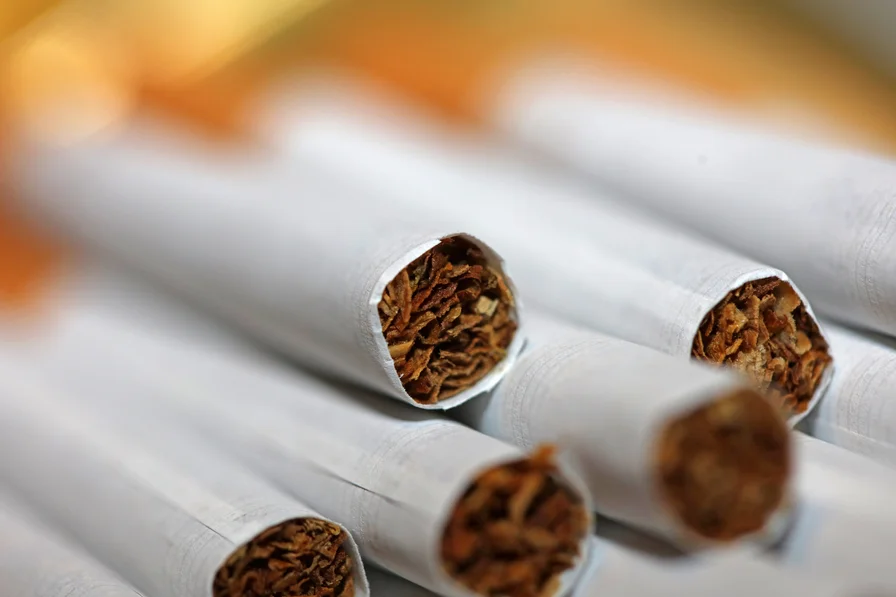
The Bynn Smoking & Tobacco Products Detector identifies and locates tobacco-related content in images, including cigarettes, cigars, vaping devices, and people actively smoking. This model is essential for enforcing tobacco advertising restrictions and age-restricted content policies.
The Challenge
Tobacco advertising faces near-universal restrictions, yet enforcement in digital spaces remains difficult. Influencer marketing, product placement in user content, and lifestyle imagery glamorizing smoking continue to reach young audiences despite regulations designed to prevent exactly this exposure.
The rise of vaping has added complexity. E-cigarettes and vape products often evade traditional tobacco detection, appearing in youth-oriented content with flavors and designs marketed to younger demographics. Platforms must detect both traditional tobacco products and modern vaping devices to meet regulatory obligations and protect public health—particularly for minors who are most susceptible to tobacco marketing influence.
For physical environments, smoking detection enables automated enforcement of no-smoking policies. CCTV systems can detect smoking in prohibited areas—hospitals, schools, public transit, restaurants, and office buildings. Rather than relying on human monitors or complaints, facilities can receive real-time alerts when violations occur. This protects public health, ensures regulatory compliance, and reduces fire risk from prohibited smoking.
Model Overview
When provided with an image, the detector analyzes the visual content to identify smoking activities and tobacco products. The model uses advanced object detection with instance segmentation, providing both the location of detected items and pixel-level masks that precisely outline each detection.
Achieving 95.4% accuracy, the model can detect a wide variety of tobacco products including traditional cigarettes, cigars, pipes, hookahs, and modern vaping devices, as well as people actively smoking or vaping.
How It Works
The model employs open-vocabulary object detection technology, allowing it to recognize tobacco-related items based on learned visual patterns. For each detected item, the system returns:
- Bounding box coordinates: The rectangular region containing the detected object
- Confidence score: A probability value (0.0-1.0) indicating detection certainty
- Class name: The specific type of tobacco-related item detected
- Segmentation mask: A pixel-level PNG mask outlining the exact shape of the detected object
Response Structure
The API returns a structured response containing:
- num_detections: Total count of tobacco-related items detected in the image
- detections: Array of detection objects, each containing:
- bbox: Bounding box coordinates {x1, y1, x2, y2}
- score: Detection confidence (0.0-1.0)
- class_name: Type of tobacco-related item
- mask_png: Base64-encoded PNG segmentation mask
- image_size: Original image dimensions {width, height}
Detected Classes
The model can identify the following tobacco-related items:
Traditional Tobacco Products
- Cigarette, cigarettes, cigaret, cigarette pack
- Cigar, little cigar, pipe, hookah
- Tobacco, roll of tobacco
- Joint, blunt
Vaping & E-Cigarettes
- Vape, vape pen, vape device
- E-cigarette, electronic cigarette
- Vapor, exhaling smoke
Smoking Accessories
- Lighter, ashtray, match
- Smoke
People & Activities
- Smoker, smoking, person smoking
- Person smoking cigarette, smoking woman, smoking man
- Person holding cigarette, person vaping, person with vape
- Smoking marijuana
Performance Metrics
| Metric | Value |
|---|---|
| Detection Accuracy | 95.4% |
| Average Response Time | 5000ms |
| Max File Size | 20MB |
| Supported Formats | GIF, JPEG, JPG, PNG, WebP |
Use Cases
- Advertising Compliance: Enforce tobacco advertising restrictions across digital platforms
- Age-Restricted Content: Filter smoking content from platforms used by minors
- Social Media Moderation: Detect smoking content that violates community guidelines
- Influencer Compliance: Identify undisclosed tobacco sponsorships in influencer content
- Public Health Campaigns: Monitor and reduce exposure to pro-smoking imagery
- Brand Safety: Prevent brand advertisements from appearing alongside smoking content
Known Limitations
Important Considerations:
- Smoke vs. Vapor: Steam, fog, or other vapor sources may occasionally be detected as smoke
- Artistic Content: Historical or artistic depictions of smoking may be flagged
- Small Objects: Very small or distant cigarettes/vapes may not be detected
- Partial Visibility: Heavily occluded items may have lower detection confidence
- Context Limitations: The model cannot distinguish between recreational and therapeutic smoking aids
Disclaimers
This model provides probability scores, not definitive identification.
- Screening Tool: Use as part of a broader content moderation strategy, not as the sole decision factor
- Human Review: High-stakes decisions should involve human review for context assessment
- False Positives: Vapor, steam, and similar visual elements may trigger detections
- Regional Variations: Tobacco regulations vary by jurisdiction; ensure compliance with local laws
Best Practice: Combine detection results with human review and contextual analysis for optimal content moderation outcomes.
API Reference
Input Parameters
Open-vocabulary object detection with segmentation. Detects objects using text prompts.
image_urlstringRequiredURL of the image for object detection
https://example.com/image.jpgResponse Fields
Object detection results with bounding boxes and segmentation masks
num_detectionsintegerNumber of objects detected
3detectionsarrayArray of detected objects
bboxobjectBounding box {x1, y1, x2, y2}
{"x1":100,"y1":150,"x2":300,"y2":400}scorefloatDetection confidence (0.0-1.0)
0.95class_idintegerClass index
0class_namestringDetected object class name
personmask_pngstringBase64-encoded PNG segmentation mask
data:image/png;base64,...image_sizeobjectOriginal image dimensions
{
  "width": 1920,
  "height": 1080
}
Complete Example
Request
{
  "model": "smoking-detection",
  "image_url": "https://example.com/image.jpg"
}
Response
{
  "success": true,
  "data": {
    "num_detections": 2,
    "detections": [
      {
        "bbox": {
          "x1": 100,
          "y1": 150,
          "x2": 300,
          "y2": 400
        },
        "score": 0.95,
        "class_id": 0,
        "class_name": "person",
        "mask_png": "data:image/png;base64,iVBORw0KGgo..."
      },
      {
        "bbox": {
          "x1": 400,
          "y1": 200,
          "x2": 600,
          "y2": 450
        },
        "score": 0.87,
        "class_id": 1,
        "class_name": "car",
        "mask_png": "data:image/png;base64,iVBORw0KGgo..."
      }
    ],
    "image_size": {
      "width": 1920,
      "height": 1080
    }
  }
}
Additional Information
429 HTTP error code along with an error message. You should then retry with an exponential back-off strategy, meaning that you should retry after 4 seconds, then 8 seconds, then 16 seconds, etc.Ready to get started?
Integrate Smoking & Tobacco Products Detector into your application today with our easy-to-use API.