
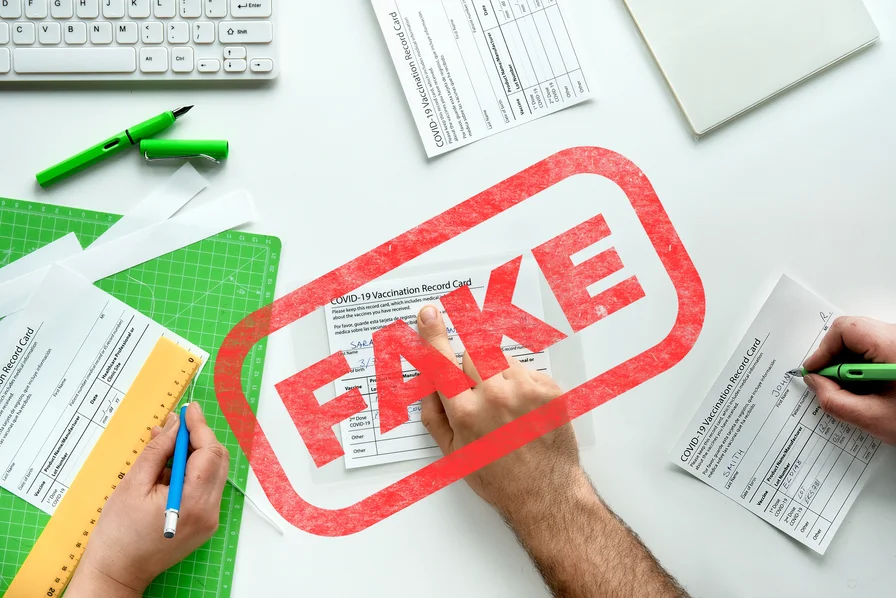
Document Tampering Detection
Detect document forgery and digital manipulation in IDs, invoices, and certificates. AI-powered fraud detection for KYC and document verification.
Bynn Document Tampering Detection
The Bynn Document Tampering Detection model identifies manipulation, forgery, and alterations in receipt images. It analyzes both visual inconsistencies and compression artifacts to detect tampered regions at the pixel level, returning precise bounding boxes around suspicious areas. Trained on 120,000 receipt images, the model excels at detecting text and numeric alterations common in expense fraud.
The Challenge
Insurance claim fraud costs billions annually—and altered medical receipts are a primary vector. Claimants submit pharmacy receipts with inflated totals, add fictitious line items to hospital bills, or modify dates to fall within coverage periods. A $50 prescription becomes $500. An elective procedure gains a covered diagnosis code. Insurance adjusters reviewing hundreds of claims daily cannot catch subtle pixel-level edits that transform legitimate receipts into fraudulent ones.
Employee expense fraud drains corporate budgets systematically. A sales rep inflates a client dinner from $80 to $180. A consultant adds a zero to a taxi fare. A manager submits the same receipt twice with minor alterations. Studies estimate 5-10% of expense reports contain fraud, yet finance teams approve most without scrutiny. The trusted employee submitting familiar-looking receipts faces almost no verification—until the pattern becomes too obvious to ignore.
Accounts payable fraud thrives on contractor expense submissions. A contractor inflates material costs on reimbursable projects. Subcontractors submit altered receipts for supplies never purchased at stated prices. Project managers approve familiar-looking documentation without pixel-level scrutiny. AP departments process thousands of contractor expenses monthly—each receipt a potential forgery that erodes project margins and corporate budgets.
The tools for receipt manipulation are freely available. Basic photo editing software can change any text or number. Content-aware fill seamlessly removes unwanted line items. Clone stamp duplicates legitimate entries. AI-powered tools now automate what once required skill. A fraudster needs only minutes to transform a genuine receipt into a profitable forgery.
Manual verification cannot scale. A forensic examiner might detect tampering through careful analysis—inconsistent fonts, compression artifacts, lighting mismatches. But that examiner can review perhaps dozens of documents daily. Organizations process thousands. The economics favor fraudsters: low effort to alter, high effort to detect, and most alterations simply never get caught.
Traditional controls fail against digital manipulation. Approval workflows assume receipts are genuine. Spending limits catch large frauds but miss systematic small ones. Spot audits review too few documents. By the time patterns emerge in analytics, the damage is done and the fraudster may have moved on.
Model Overview
The Bynn Document Tampering Detection model employs multi-signal analysis to identify manipulated regions in receipt images. It combines frequency analysis—detecting compression artifacts and re-saving signatures—with visual analysis—identifying inconsistencies in texture, lighting, and edges. The model achieves 94.5% accuracy on detecting tampered receipts.
Unlike simple hash-based verification, this model identifies which regions have been modified, enabling investigators to see exactly where totals, dates, or line items have been altered.
How It Works
The model analyzes documents through multiple detection pathways:
- Frequency domain analysis: Detects JPEG compression artifacts, double-compression signatures, and block boundary inconsistencies that indicate re-saving after editing
- Visual perception analysis: Identifies inconsistencies in texture, noise patterns, lighting, and edges that indicate copy-paste or content-aware fill operations
- Multi-scale detection: Analyzes features at multiple resolutions to catch both large-area modifications and fine-grained text alterations
- Pixel-level segmentation: Generates precise masks of tampered regions, converted to bounding boxes for clear localization
- Sliding window inference: For high-resolution documents, analyzes overlapping 512×512 regions to maintain detection accuracy across the entire image
Response Structure
The API returns detailed tampering analysis with region localization:
- tampered: Boolean indicating whether manipulation was detected
- num_regions: Count of distinct tampered areas identified
- regions: Array of detected tampering regions, each containing:
- x, y: Top-left corner coordinates of bounding box
- width, height: Dimensions of the bounding box
- confidence: Detection confidence for this region (0.0-1.0)
- image_size: Original document dimensions (width, height)
Tampering Types Detected
Numeric Manipulation
- Altered totals, subtotals, and tax amounts
- Changed quantities and unit prices
- Modified dates and timestamps
- Edited tip amounts and gratuities
Text Manipulation
- Added or removed line items
- Changed merchant names or descriptions
- Altered item descriptions
- Modified payment method details
Content Editing
- Copy-paste from other receipts
- Content-aware fill to remove items
- Clone stamp modifications
- Splicing sections from multiple receipts
Compression Artifacts
- Double JPEG compression signatures
- Mismatched compression quality regions
- Block boundary inconsistencies
- Re-saving artifacts after editing
Performance Metrics
| Metric | Value |
|---|---|
| Detection Accuracy | 94.5% |
| Average Response Time | 180ms |
| Max File Size | 20MB |
| Supported Formats | JPEG, JPG, PNG, WebP |
| Training Dataset | 120,000 receipt images |
| Analysis Resolution | 512×512 with sliding window |
Use Cases
- Expense Management: Detect tampered receipts in employee expense reports before reimbursement
- Insurance Claims: Identify altered receipts and invoices submitted as proof of purchase or repair costs
- Tax Documentation: Verify authenticity of receipts submitted for tax deductions and audits
- Accounts Payable: Validate vendor invoices and receipts before payment processing
- Warranty Claims: Detect manipulated purchase receipts in warranty and return fraud
- Corporate Card Programs: Screen receipts attached to corporate card transactions
- Travel Reimbursement: Verify hotel, meal, and transportation receipts in travel expense claims
- Audit Support: Provide automated receipt verification for internal and external audits
Known Limitations
Important Considerations:
- Image quality dependency: Very low resolution or heavily compressed images reduce detection accuracy
- Physical document scans: Scanning artifacts may occasionally trigger false positives on genuine documents
- Screenshot captures: Documents captured via screenshot lose compression signatures used for detection
- Format conversion: Converting between formats (e.g., PDF to JPG) may affect artifact-based detection
- Novel techniques: Highly sophisticated manipulation using the latest AI tools may evade detection
Disclaimers
This model provides probability-based tampering detection, not definitive forensic proof.
- Combine with AI Detection: Use alongside AI-generated image detection—tampering detection catches edits to real receipts, AI detection catches entirely fabricated receipts
- False Positive Handling: Legitimate documents with unusual characteristics may flag; provide appeal processes
- Multi-Signal Verification: Combine with document classification, OCR validation, and database checks for comprehensive verification
- Threshold Tuning: Adjust confidence thresholds based on your risk tolerance and false positive costs
- Audit Trail: Maintain records of detection results for compliance and dispute resolution
Best Practice: Use receipt tampering detection alongside AI-generated image detection for comprehensive fraud prevention. Tampering detection catches altered genuine receipts, while AI detection catches entirely fabricated receipts generated by AI tools. Combine both with OCR data extraction and policy rule validation for a robust expense verification workflow.
Need Full Document Fraud Detection?
This model is optimized specifically for receipt tampering. For comprehensive document fraud detection covering passports, invoices, PDFs, identity documents, and more, see our full Document Fraud Detection solution.
API Reference
Input Parameters
Detects tampering and manipulation in document images (identity verification)
image_urlstringRequiredURL of document image to check for tampering
https://example.com/document.jpgResponse Fields
Document tampering detection with suspicious region locations
tamperedbooleanTrue if manipulation detected
falsenum_regionsintegerNumber of suspicious regions found
0regionsarrayBounding boxes for tampered areas
[
  {
    "x": 100,
    "y": 150,
    "width": 200,
    "height": 100,
    "confidence": 0.87
  }
]image_sizeobjectOriginal image dimensions
{
  "width": 1920,
  "height": 1080
}
Complete Example
Request
{
  "model": "document-tampering",
  "image_url": "https://example.com/document.jpg"
}
Response
{
  "success": true,
  "data": {
    "tampered": false,
    "num_regions": 0,
    "regions": [],
    "image_size": {
      "width": 1920,
      "height": 1080
    }
  }
}
Additional Information
429 HTTP error code along with an error message. You should then retry with an exponential back-off strategy, meaning that you should retry after 4 seconds, then 8 seconds, then 16 seconds, etc.Ready to get started?
Integrate Document Tampering Detection into your application today with our easy-to-use API.